
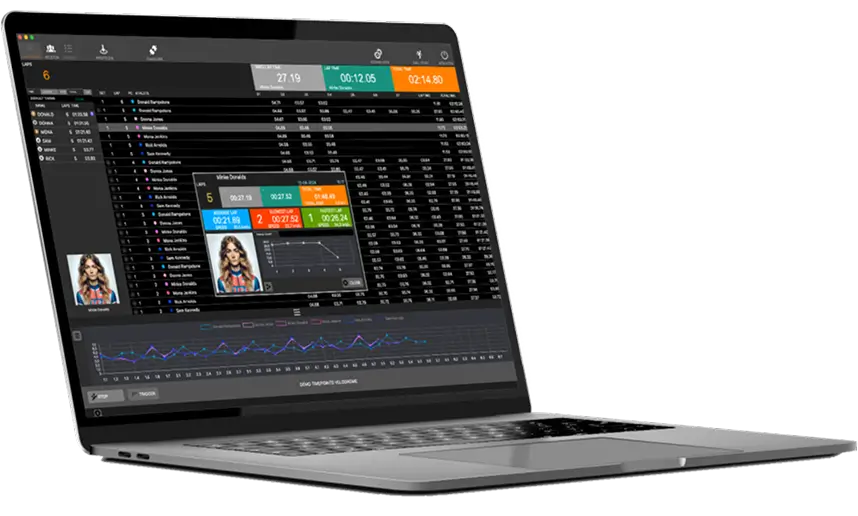
Timing technology is most valuable when it becomes a natural part of training. If every session requires specialist setup, coaches will eventually fall back to a stopwatch. The right system fits the venue, group size and decisions the coach needs to make.
Begin with the session, not the equipment
List the formats your club runs every week: flying sprints, repeated intervals, lap-based endurance work or multi-station tests. Note how many athletes participate and whether they start together or independently. These details determine the number and position of timing points more reliably than a feature comparison.
Consider feedback speed
Immediate feedback is powerful during technical work because an athlete can connect the result to the movement they just performed. For longer conditioning sessions, a summary at the end of a set may be enough. Decide where results need to appear and who needs to see them.
- How long can setup realistically take?
- Can one coach operate the system while leading the session?
- Does the venue have dependable power and connectivity?
- Can results be exported in a format the club already uses?
- Is the equipment robust enough for regular transport and weather exposure?
Test with a real training group
A demonstration proves that equipment works; a pilot proves that it works for your club. Run a familiar session and observe the complete routine, including athlete assignment, corrections and the post-session review. Ask coaches what slowed them down and athletes whether the feedback was clear.
Choose the smallest setup that handles today’s regular sessions well and can expand when your needs become concrete. Simplicity is not a compromise when it helps the technology get used every week.