
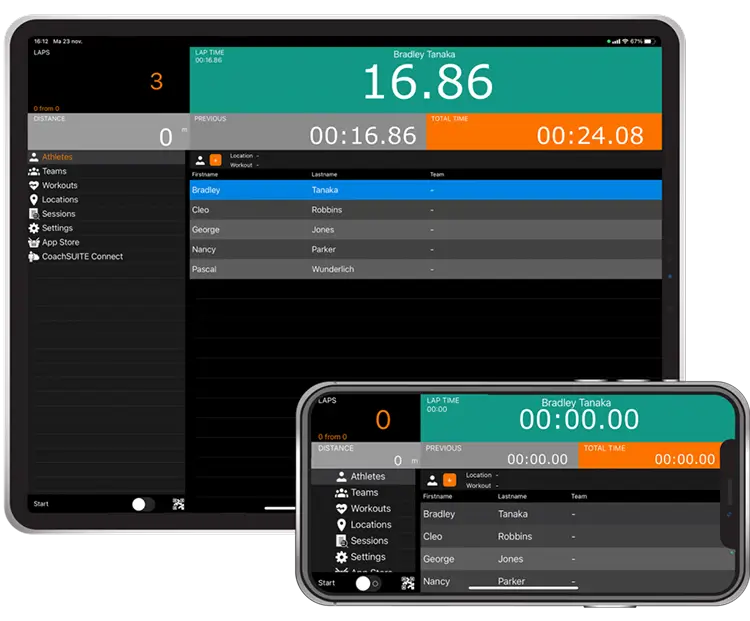
At many endurance events, spectators see athletes for only a few seconds at a time. Between those moments, they are left to guess who is leading, whether a gap is closing and when their athlete will return. A well-designed live-results experience fills that gap without asking the audience to become timing experts.
Tell the race story at a glance
The most useful display is not necessarily the one with the most columns. Rank, athlete name, current split and time difference are usually enough to explain the competition. Secondary details can remain available on a deeper results page for viewers who want them.
- Use large type and strong contrast for outdoor readability.
- Keep labels consistent across venue screens and mobile results.
- Show when data was last updated.
- Avoid changing layouts at the moment new results arrive.
Serve different audiences from the same data
A coach may look for split consistency while a family member wants an estimated finish time. Both views can use the same timing feed, presented at the right level of detail. Shared data also reduces the risk of contradictory information appearing across channels.
Reliability is part of the design
Set clear expectations when a connection is interrupted. Retain the latest verified result, display its timestamp and recover gracefully when the feed returns. An honest status is more reassuring than a blank screen or endlessly spinning loader.
Live results work best when they feel almost invisible: quick to understand, current and consistent. That clarity helps spectators follow the competition and gives every athlete a more visible performance.